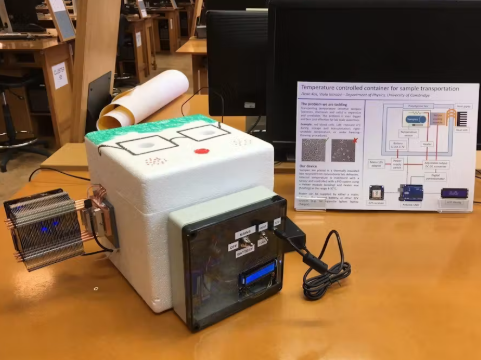
Temperature testing is an important part of product development and quality assurance. Many products and materials must operate reliably across different environmental conditions, so manufacturers and researchers need equipment capable of creating controlled testing environments.
For laboratories that require flexibility, portable testing equipment can offer practical advantages. A LIB industry portable temperature test chamber can be considered when controlled temperature testing needs to be performed without relying on a large fixed installation.
The right solution depends on the test objective, sample size, required temperature range, and available workspace.
Understanding Controlled Temperature Testing
Temperature testing involves exposing a product, material, or component to selected temperature conditions and observing its response.
Engineers may use testing to evaluate performance, identify weaknesses, compare materials, or support product development. Controlled conditions make it easier to repeat tests and compare results.
Testing can be especially valuable when products may encounter significant environmental changes during transportation, storage, or operation.
Why Portability Can Be Useful
Traditional environmental testing systems can require dedicated space. Portable or compact equipment may provide greater flexibility for laboratories where space and workflow are important considerations.
A portable chamber can potentially be integrated into different testing environments depending on its specifications and installation requirements.
This flexibility may be useful for research teams that work on multiple projects or organizations that need equipment that fits into a changing laboratory layout.
Applications Across Industries
Temperature-controlled testing is used in many areas.
Electronics manufacturers may evaluate components under different temperature conditions. Automotive companies may test selected materials or components. Universities and research laboratories can use controlled chambers for experiments and educational projects.
Other applications may include materials research, packaging evaluation, and product development.
The testing method should always determine the equipment requirements rather than selecting a chamber based only on general industry use.
Selecting the Appropriate Temperature Range
One of the first specifications to examine is the operating temperature range.
Different applications require different environmental conditions. Some tests may involve relatively moderate temperature changes, while others require exposure to more extreme conditions.
Users should identify the minimum and maximum temperatures required for their testing program and compare these requirements with the equipment’s specifications.
It is also useful to consider temperature stability and uniformity, especially when test results depend on maintaining consistent conditions.
Considering Sample Dimensions
Portability does not remove the need to select the correct chamber size.
Before purchasing equipment, users should determine the dimensions of their test samples. Fixtures, sensors, and other equipment placed inside the chamber should also be considered.
The chamber should provide sufficient working space without unnecessary unused volume.
Workflow Efficiency
Testing equipment should fit naturally into the laboratory workflow.
If technicians frequently change samples or testing conditions, easy access and straightforward controls can save time. A clear interface can also help reduce operational errors.
Standardized testing procedures should be documented so that different team members can perform repeat tests consistently.
Monitoring Test Conditions
Accurate monitoring is important during environmental testing.
Users should know what information the control system displays and whether data recording or monitoring functions are available for their particular application.
For research and quality-control programs, maintaining records of test conditions can help teams understand how products behaved during specific experiments.
Energy and Workspace Considerations
Laboratories often need to manage energy consumption and available workspace carefully.
A compact chamber may require less physical space than a larger system, but users should still review its electrical requirements and operating conditions.
The chamber should be installed in a location that provides appropriate clearance and ventilation according to the manufacturer’s instructions.
Maintenance and Reliability
Regular maintenance is essential for laboratory testing equipment.
Cleaning, inspection, calibration where applicable, and servicing should be carried out according to the manufacturer’s recommendations. Keeping maintenance records can also help organizations track equipment condition.
Before purchasing, users may want to review the availability of technical support, spare parts, documentation, and service resources.
Portability Does Not Mean Compromising Requirements
The term portable should not automatically be interpreted as suitable for every application.
Users still need to verify whether the chamber can achieve the required temperature range and stability. The chamber must also accommodate the intended sample size and testing method.
A well-defined testing requirement makes it easier to determine whether a portable solution is appropriate.
For laboratories looking for compact equipment for controlled testing, information about a LIB industry portable temperature test chamber can be reviewed alongside other technical specifications before making a decision.
Planning for Future Testing
Laboratory requirements can change over time.
A company may begin by testing small components and later expand its research program. Before purchasing, it is therefore useful to consider whether the chamber will remain suitable for anticipated future applications.
The goal should be to select equipment that fits both present requirements and realistic future needs.
Safety Considerations
Environmental testing equipment should be operated according to manufacturer instructions.
Users should verify electrical requirements, placement conditions, ventilation, sample compatibility, and operating procedures before starting a test.
Staff should also understand what materials can safely be placed inside the chamber and what procedures should be followed in case of an unexpected event.
Frequently Asked Questions
1. What is a portable temperature testing chamber used for?
It is used to create controlled temperature conditions for testing products, components, and materials. Specific applications depend on the chamber’s technical capabilities.
2. How do I know whether a portable chamber is suitable?
Compare the required temperature range, chamber volume, stability, uniformity, sample dimensions, and other testing requirements with the manufacturer’s specifications.
3. Does a portable chamber require maintenance?
Yes. Cleaning, inspection, and other maintenance procedures should be performed according to the manufacturer’s recommendations.
Conclusion
Flexible temperature testing equipment can help laboratories conduct controlled environmental tests while making efficient use of available workspace. Portability can be valuable, but technical requirements should always remain the primary consideration.
By carefully reviewing temperature range, sample capacity, control functions, maintenance requirements, installation conditions, and future needs, laboratories can select equipment that supports reliable testing and efficient workflows.