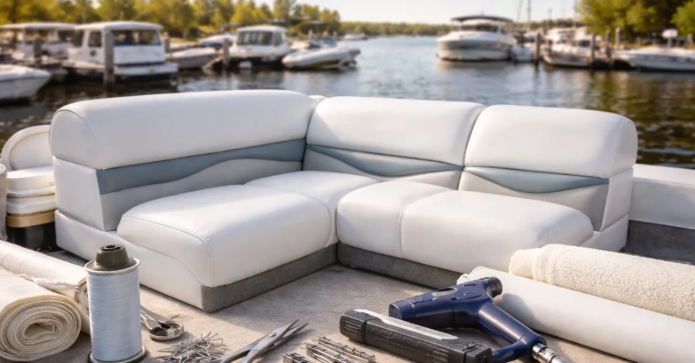
Comfort and appearance are two important parts of a successful boat interior, but the materials used for seating must also withstand challenging environmental conditions. Boat upholstery can be exposed to water, sunlight, humidity, salt, frequent handling, and temperature changes, making material selection particularly important.
A suitable upholstery covering can contribute to the appearance and usability of seating while simplifying everyday maintenance. Whether a project involves a small recreational boat, yacht, commercial vessel, or outdoor marine seating area, buyers should evaluate the material according to its actual operating environment.
Understanding Marine Upholstery Requirements
Indoor furniture and boat seating do not experience the same conditions.
Marine seating may become wet during normal use. It can also remain exposed to sunlight for long periods, particularly on open decks.
Because of these conditions, upholstery should be selected with environmental exposure in mind rather than simply choosing a material based on color or texture.
Moisture Resistance
Water is an unavoidable part of the marine environment.
Seating may encounter rain, spray, splashes, or damp clothing. A material with appropriate moisture-resistant characteristics can make cleaning easier and help the upholstery remain suitable for regular outdoor use.
However, moisture resistance should not be considered in isolation. Seams, stitching, foam, and the underlying construction also affect how the finished seating responds to water exposure.
UV Exposure
Sunlight can gradually change the appearance of upholstery.
Repeated UV exposure may contribute to fading or surface deterioration depending on the material. Boats that spend considerable time outdoors can therefore require materials with suitable resistance to sunlight.
When comparing options, buyers should ask for information about UV performance and intended outdoor use.
Abrasion and Everyday Wear
Marine seating can experience significant physical wear.
Passengers may repeatedly sit, stand, move across cushions, or place equipment on seats. High-contact areas therefore need suitable abrasion resistance.
The intended level of use should be communicated to the supplier so that an appropriate material specification can be considered.
Material Appearance
Boat interiors often have carefully planned color schemes and design themes.
Upholstery materials are available in different colors, textures, and finishes, allowing designers to create everything from minimalist modern interiors to more traditional marine styles.
Appearance should be balanced with maintenance needs. For example, heavily used seating may require a finish that is easier to keep clean.
Why Synthetic Upholstery Is Considered
Synthetic leather and other engineered materials are frequently considered for marine upholstery because they can be developed for specific performance requirements.
Depending on the product, these materials may offer combinations of flexibility, surface durability, water resistance, and ease of cleaning.
However, product specifications vary significantly, so buyers should confirm that the selected material is actually intended for marine or outdoor use.
For businesses comparing suitable coverings, marine upholstery leather provides a reference point when exploring materials designed for marine applications.
Matching Material to Boat Type
The requirements of a small fishing boat may differ from those of a luxury yacht.
A recreational vessel with exposed seating may require strong resistance to sunlight and water. Interior yacht seating may have greater emphasis on design, comfort, and coordinated finishes.
Commercial vessels can have high traffic levels, making durability and easy maintenance particularly important.
Understanding the boat’s specific usage pattern helps narrow the available material choices.
Cleaning Considerations
Marine upholstery can accumulate salt, dust, food particles, sunscreen, and other contaminants.
A practical cleaning routine can help preserve the appearance of the upholstery. The cleaning method should always follow the material manufacturer’s recommendations.
It is also useful to consider how easily spills can be removed. Materials that are simple to clean can reduce maintenance time during regular boat use.
Installation and Stitching
A high-quality material still requires careful installation.
Measurements should be accurate, patterns should be prepared correctly, and seams should be positioned appropriately. Stitching needs to be strong enough for the intended application.
Professional upholstery work can help ensure that cushions fit correctly and that the finished seating maintains a neat appearance.
Planning for Long-Term Use
When comparing materials, the cheapest option is not necessarily the most economical over time.
A material that requires frequent replacement can create additional labor and maintenance costs. A more suitable material may provide better value if it remains functional and attractive for a longer period.
Buyers should therefore compare expected service life, maintenance requirements, installation costs, and replacement considerations.
Frequently Asked Questions
1. What makes upholstery suitable for marine use?
Suitable marine upholstery generally needs characteristics appropriate for moisture, sunlight, frequent use, and outdoor conditions. Exact requirements depend on the application.
2. Can marine upholstery be used for outdoor furniture?
Some materials designed for marine applications may also be suitable for outdoor furniture. The manufacturer’s recommended uses should always be checked.
3. How should boat upholstery be maintained?
Regular cleaning using products compatible with the material is important. Following the manufacturer’s care instructions helps protect the surface.
Conclusion
Selecting boat upholstery requires a balance between comfort, appearance, durability, environmental resistance, and maintenance. Water exposure, sunlight, abrasion, and frequent use should all be considered before purchasing.
By clearly defining the application and comparing material specifications, boat owners, manufacturers, and upholstery professionals can make more informed choices and create seating that is both attractive and practical.