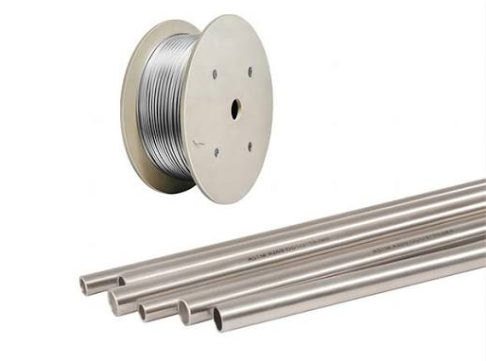
Tubing is a fundamental component in many industrial systems, from aerospace equipment and transportation technology to energy systems and specialized machinery. Because tubes can carry fluids, gases, or other materials, their design must satisfy both mechanical and environmental requirements.
Material selection is therefore an important stage of product development. Engineers need to balance weight, strength, corrosion resistance, formability, manufacturing requirements, and cost.
Among the available options, titanium alloys can provide a useful combination of characteristics for demanding applications.
The Importance of the Right Material
A tubing material must perform reliably throughout its expected service life. A poor material choice can increase the risk of corrosion, deformation, leakage, or premature replacement.
The selection process should begin with a clear understanding of operating conditions.
Engineers should identify pressure, temperature, fluid compatibility, mechanical loads, and expected environmental exposure before choosing the material.
Why Lightweight Materials Are Valuable
Reducing weight can provide important advantages.
In aircraft and other transportation systems, lighter components can contribute to improved efficiency. In industrial equipment, lower weight can make components easier to install, handle, or integrate into larger systems.
Titanium is often considered because it offers relatively low density compared with many conventional structural metals while retaining useful mechanical properties.
Understanding the Alloy Specification
Different titanium alloys have different characteristics. A material such as Ti-3Al-2.5V may be considered where a balance of strength, ductility, and formability is required.
Anyone evaluating ti3al2.5v should confirm the complete material specification, dimensions, manufacturing condition, and applicable standards before using it in a project.
A material designation alone should not replace engineering evaluation.
Tubing Geometry
The geometry of a tube can be just as important as the alloy.
Outside diameter, inside diameter, wall thickness, length, and tolerances can influence:
- Pressure capability
- Weight
- Fluid capacity
- Connection requirements
- Structural behavior
- Manufacturing cost
For precision applications, dimensional consistency becomes particularly important.
Formability
Tubing may need to be bent or shaped during manufacturing and installation.
An alloy with appropriate ductility and formability can provide advantages during fabrication. However, bending processes must still be controlled carefully to avoid unwanted deformation or surface damage.
Manufacturers should use suitable procedures based on the alloy and tube specification.
Joining Methods
Most tubing systems contain multiple components connected through welding, fittings, or other joining methods.
The selected alloy must be compatible with the intended joining technique. Welding, in particular, requires appropriate procedures and environmental controls.
Poor joining practices can compromise an otherwise high-quality tube.
Corrosion Considerations
Corrosion can significantly affect the service life of tubing.
Industrial systems may operate around moisture, chemicals, salt, or other corrosive substances. Titanium alloys can provide strong corrosion resistance in many environments.
This can be especially useful where maintenance access is difficult or component replacement would be expensive.
Still, chemical compatibility should always be verified for the exact operating conditions.
Quality Assurance
Quality assurance is essential when producing specialized tubing.
Manufacturers may perform dimensional inspection, material verification, surface examination, and other testing according to the project specification.
For critical applications, documentation can provide useful evidence that the supplied product meets the required standards.
Choosing a Manufacturing Partner
The quality of the final product depends heavily on the manufacturer’s expertise.
A capable manufacturer should understand titanium processing, tube forming, welding, finishing, and inspection.
Buyers should also consider whether the manufacturer can maintain consistency across repeated production batches.
FAQs
1. Why is titanium considered for lightweight tubing?
Titanium can provide a useful combination of relatively low density, mechanical performance, and corrosion resistance.
2. What should engineers consider before choosing a titanium alloy?
They should consider pressure, temperature, chemical exposure, mechanical loads, dimensions, joining methods, and applicable standards.
3. Does tube geometry affect performance?
Yes. Diameter, wall thickness, length, and tolerances can influence pressure capability, weight, fluid capacity, and installation.
Conclusion
Selecting a tubing material requires a complete understanding of the intended application. Lightweight titanium alloys can provide useful benefits, but the correct grade and manufacturing specification must be selected carefully.
By considering operating conditions, geometry, joining requirements, quality control, and long-term service needs, engineers can develop tubing systems that provide reliable performance without unnecessary weight.