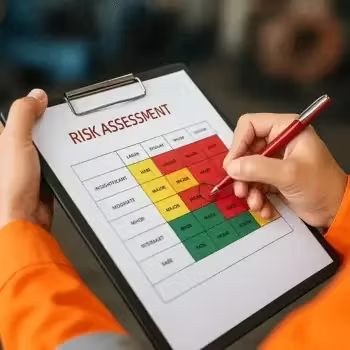
Introduction to Fire Risk Assessment Standards and Guidelines
Fire safety is a critical responsibility for organizations, property owners, and employers across all sectors. Fire Risk Assessment Standards and Guidelines provide a structured framework to identify fire hazards, evaluate risks, and implement effective control measures. These standards help ensure consistency, legal compliance, and best practices in fire safety management. Understanding these guidelines is essential for creating safer environments and reducing the impact of fire-related incidents.
What Are Fire Risk Assessment Standards?
Fire Risk Assessment standards are established rules and best practices designed to guide the assessment of fire risks in buildings and workplaces. They define how assessments should be conducted, documented, and reviewed. These standards typically cover hazard identification, risk evaluation, fire prevention measures, and emergency response planning.
By following recognized standards, organizations can ensure that their fire risk assessments are thorough, reliable, and aligned with legal requirements.
Importance of Fire Safety Guidelines
Fire safety guidelines play a vital role in protecting lives and property. They provide clear direction on how to prevent fires, control hazards, and respond effectively during emergencies. Without proper guidelines, fire safety practices can be inconsistent and ineffective.
Adhering to established guidelines helps organizations minimize risks, avoid penalties, and demonstrate a strong commitment to safety. It also ensures that fire risk assessments are practical and actionable rather than purely theoretical.
Common Fire Risk Assessment Standards
Several internationally recognized standards and frameworks guide fire risk assessments. These include national fire safety regulations, building codes, and occupational safety standards. Many guidelines focus on key areas such as fire detection systems, fire resistance of building materials, means of escape, and emergency planning.
While specific standards may vary by country, their core principles remain the same: prevention, protection, and preparedness.
See also: Company Formation and Cost Breakdown for New Businesses
Key Elements Covered in Fire Risk Assessment Guidelines
Fire risk assessment guidelines typically cover a range of essential elements. These include identifying sources of ignition, fuel, and oxygen, assessing people at risk, and evaluating the likelihood and consequences of fire. Guidelines also address fire prevention measures, fire-fighting equipment, emergency evacuation routes, and staff training.
Documentation and regular review are also emphasized to ensure that assessments remain current and effective.
Applying Standards in Different Types of Buildings
Fire risk assessment standards can be applied to various environments, including offices, factories, schools, hospitals, and residential buildings. Each type of building has unique fire risks, and guidelines help tailor assessments accordingly.
For example, public buildings require clear evacuation routes and signage, while industrial facilities may focus more on machinery and hazardous materials. Applying standards correctly ensures appropriate safety measures for each setting.
Role of Employers and Building Managers
Employers and building managers are responsible for ensuring that fire risk assessments meet required standards. This includes appointing competent persons to conduct assessments, implementing recommended safety measures, and providing fire safety training.
Regular inspections and audits help ensure ongoing compliance and continuous improvement in fire safety management.
Regular Review and Updates of Fire Risk Assessments
Fire risk assessment standards emphasize the importance of regular reviews. Changes in building layout, occupancy, equipment, or regulations can introduce new fire risks. Periodic updates ensure that assessments remain accurate and effective over time.
Continuous monitoring and improvement help organizations stay compliant and prepared for emergencies.
Benefits of Following Fire Risk Assessment Standards
Following fire risk assessment standards offers numerous benefits. It enhances safety, reduces fire incidents, and ensures compliance with legal and insurance requirements. Organizations also benefit from improved risk management, reduced downtime, and increased confidence among employees and stakeholders.
Conclusion
Fire Risk Assessment Standards and Guidelines Explained highlights the importance of structured and consistent fire safety practices. By understanding and applying recognized standards, organizations can effectively identify risks, implement preventive measures, and respond to emergencies. A strong commitment to fire risk assessment standards ultimately leads to safer buildings, protected lives, and long-term organizational resilience.